



News
Palletizing vs Individual Crating Which is Better for Wholesale
For importers, wholesalers, distributors and funeral supply companies that handle granite monuments and tombstones, packaging strategy is a central component of the supply chain. Decisions about palletizing versus individual crating affect manufacturing flow, materials selection, customization options, quality control, and international shipping costs and risk. Understanding the trade-offs helps buyers and suppliers plan for safe transit, regulatory compliance and efficient handling at destination.
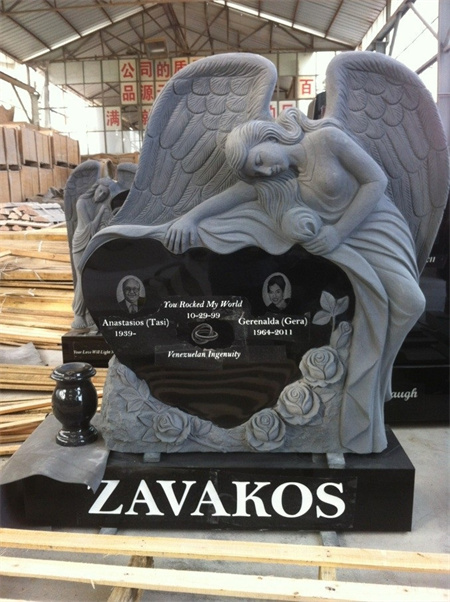
Palletizing is commonly used for batches of smaller memorial components, granite slabs, marker pieces and accessory items that can be grouped together on a skid. From a manufacturing perspective, palletizing reduces labor and materials per unit because multiple finished goods can be secured with blocking, plastic stretch wrap, edge protectors and steel strapping. Pallet loads optimize container utilization for FCL shipments, lowering per-item freight cost and simplifying warehouse handling with forklifts. For many wholesalers and distributors, the balance of cost-efficiency and acceptable protection makes palletizing a preferred method for high-volume orders of uniform items produced on CNC lines with consistent finishing.
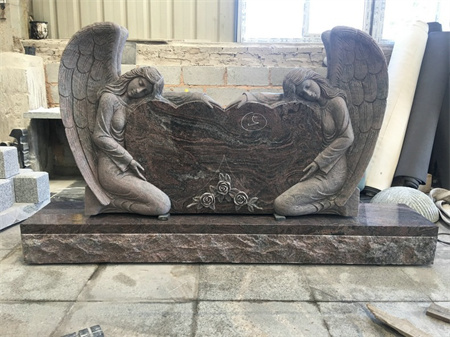
Individual crating, typically with custom wooden crates that meet ISPM15 regulations, is often required for large monuments, single-piece upright headstones, or heavily detailed memorials with delicate carving or applied metal work. Crates provide rigid internal bracing, foam cushioning, and tailored supports for irregular shapes, helping to protect high-value items during rough handling and transshipment. From a manufacturing viewpoint, crate design is an extension of customization: fabricators can specify internal frames, sacrificial boards, and removable panels to secure polished surfaces and fragile embellishments throughout export. Individual crating also assists with quality control workflows because each piece can be inspected, photographed and documented before sealing, which simplifies claims handling in case of damage.
Materials used for packing are key regardless of method. For palletized loads, durable pallets (treated wood, steel-reinforced or composite) combined with vibration-damping foam, corner boards and polyester straps help prevent abrasion and edge chipping on granite. For crates, kiln-dried timber, multilayer plywood and closed-cell foam inserts create a controlled micro-environment for polished granite surfaces and metal components prone to corrosion. All wooden materials intended for international freight must be treated to comply with customs and phytosanitary rules to avoid detention or fumigation at destination ports.
Logistics considerations shape the final decision. Palletizing supports denser stacking and lower per-unit ocean freight in full container loads, and it accelerates turnover in distribution centers. However, pallet loads can be more vulnerable to point impacts and edge damage, and they may not be practical for oversized monuments that cannot be safely stacked. Individual crating increases packaging cost and container footprint but significantly reduces the likelihood of catastrophic damage for one-off or high-value memorials. For LCL shipments, crates can simplify handling because each item is segregated, whereas mixed pallet loads in consolidation may suffer from shifting and uneven weight distribution.
Quality control, documentation and insurance practices should accompany either approach. Pre-shipment inspections, load-securing photos, detailed packing lists and clear labeling aid customs clearance and claims resolution. Coordinating crate or pallet specifications in purchase agreements enables consistent results from the fabricator and aligns with the importer’s receiving equipment and storage capacity.
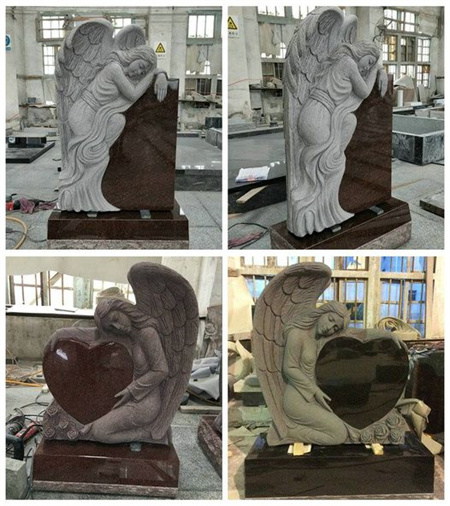
Ultimately, the right choice depends on the product profile, order size, value and destination logistics. Palletizing tends to favor standardized, high-volume wholesale shipments of granite memorial components, while individual crating is appropriate for large, customized or high-value monuments requiring maximum protection during international shipping. A pragmatic, case-by-case evaluation that includes manufacturing constraints, materials, customization needs and quality control requirements will produce the most cost-effective and reliable supply-chain outcome.
 Chaole industrial district ,Chongwu town,Huian,Fujian,362131,China


If you want to know more about our products designs
and get the best quotation, please don't hesitate to send a subscription
email,thank you!
Copyright © Huian Boda Stone Co.,Ltd All rights reserved.

ipv6 network supported


