



News
Shipping Methods for Heavy Stone Products
Exporting granite monuments and tombstones involves logistical considerations that differ from typical freight. The density and fragility of natural stone, combined with the weight of finished memorials and the need for precise customization, require careful coordination between manufacturers, importers, wholesalers, and funeral supply companies. Choosing the right transport method, packaging and handling protocol, insurance and documentation are essential to minimize damage, avoid delays at ports, and keep total landed costs predictable.
Sea freight remains the principal mode for international movement of heavy stone due to cost efficiency for high-mass consignments. Full container load (FCL) shipments in 20ft and 40ft containers are commonly used for palletized or crated tombstones and monument components. For oversized or irregularly shaped pieces, flat rack and open-top containers provide secure alternatives. Breakbulk or heavy-lift project cargo services are appropriate when single pieces exceed container dimensions or gross weight limits; such shipments typically require specialized lifting equipment, port stowage planning, and may move on multipurpose vessels. Air freight is generally impractical for granite due to prohibitive cost, and consolidation (LCL) should be approached cautiously because frequent handling increases risk of chipping and breakage.
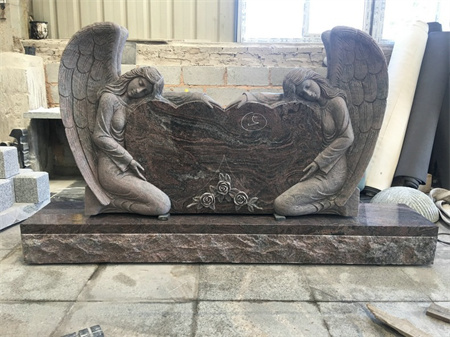
Packaging and internal load securing are critical to protecting finished stones and carved details during transit. Manufacturers commonly use reinforced wooden crates, steel frames, or custom-built pallets with timber skids, plus edge protection, foam padding, and corrosion-inhibiting wrap. Proper dunnage and lashing within containers prevent movement; load plans should account for weight distribution to avoid exceeding container floor load and to facilitate safe lifting ashore. Clearly marking net and gross weights, center-of-gravity, and lifting points on each crate aids stevedores and freight forwarders in safe handling.
On the manufacturing side, material selection and customization decisions have direct shipping implications. Denser granites and larger single-piece memorials increase transport complexity, while modular designs and segmented monuments can reduce freight costs and simplify packing. Customization specifications — dimensions, finish (polished, honed, sandblasted), inscriptions, and fixture points — should be finalized and documented before shipment. Manufacturers typically produce detailed packing lists, CAD drawings or photos of packed units, and provide pre-shipment photos or videos for buyer approval to reduce inspection disputes.
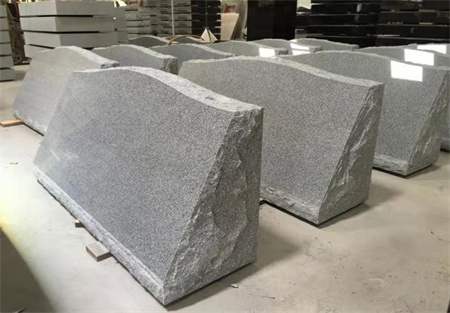
Quality control protocols should include dimensional verification, finish inspection, and load-testing of packaging assemblies before export. Pre-shipment inspections by in-house or third-party inspectors (for example, SGS or Bureau Veritas) can confirm that crates meet specified strength standards and that stones are secured to withstand normal sea conditions. Recording serial numbers or project codes and attaching certificates of conformity and material origin can simplify customs clearance and inventory reconciliation at the destination.
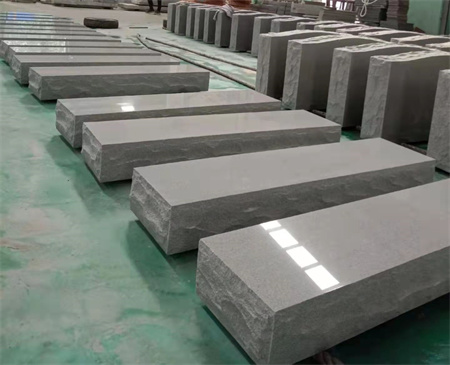
Cargo insurance and international commercial terms influence risk allocation. Common Incoterms such as FOB and CIF are frequently used; FOB places responsibility on the seller until goods are loaded on board, while CIF transfers higher seller responsibility including ocean freight and insurance. Clear communication between seller, buyer, freight forwarder and customs broker on documentation requirements — commercial invoice, packing list, bill of lading, certificate of origin and any required import permits — helps avoid demurrage and clearance delays.
Local handling capabilities at origin and destination ports also affect method selection. Access to cranes capable of handling heavy-lift items, availability of specialized stevedoring, and inland transport infrastructure for oversize loads should be evaluated during shipment planning. Planning lead times to accommodate customs inspections, monument installation scheduling, and any required embalming of accompanying metal fixtures contributes to smoother project execution.
In conclusion, managing exports of granite monuments and tombstones successfully requires integrating manufacturing considerations, robust packaging and quality control, and selection of suitable international shipping methods. Early coordination on customization details, documentation and handling requirements helps minimize risk and control total landed cost for B2B buyers and distributors.
 Chaole industrial district ,Chongwu town,Huian,Fujian,362131,China


If you want to know more about our products designs
and get the best quotation, please don't hesitate to send a subscription
email,thank you!
Copyright © Huian Boda Stone Co.,Ltd All rights reserved.

ipv6 network supported


