


News
Common Headstone Engraving Fonts Explained
Choosing the appropriate lettering for memorial products requires balancing aesthetic preferences with manufacturing realities. For importers, wholesalers, and distributors of granite monuments and tombstones, understanding which fonts perform well with common production methods — sandblasting, laser etching, and CNC routing — helps reduce rework and ensures durable results in different climates. Serif fonts such as Roman and Times variations remain popular for inscriptions due to their traditional appearance and clear stroke contrast, which translates well into sandblasted faces on polished black or gray granite.
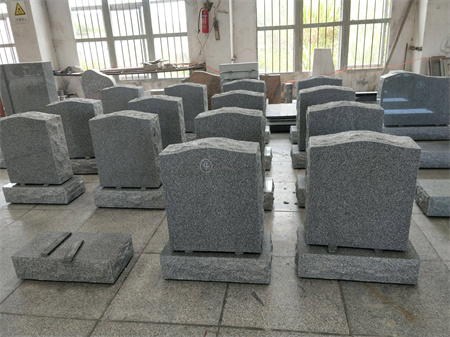
Sans-serif options like Optima and Futura are favored when a cleaner, modern look is required; their uniform stroke widths are forgiving in CNC routing and laser etching, and they maintain legibility at smaller sizes. Script and calligraphic styles deliver a bespoke aesthetic, but they demand careful engineering: thin flourishes can fail during sandblasting or weather over time on softer stones. For this reason many manufacturers recommend slightly increasing stroke width, simplifying elaborate curves, or using laser etching on granite monument surfaces where fine detail can be retained without deep blasting.
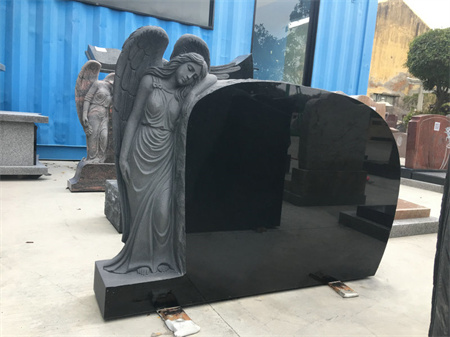
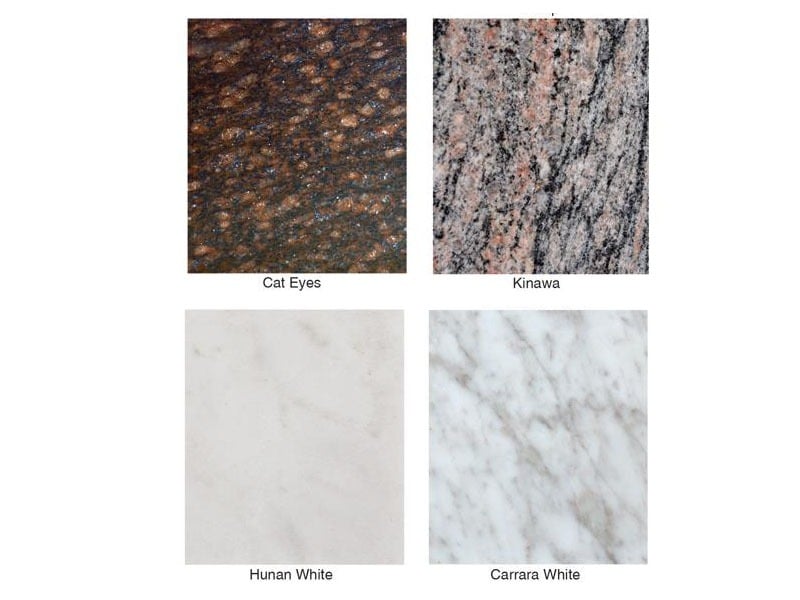
Specialty typefaces such as Trajan, Engravers, and Blackletter are often selected for memorial plaques and military or heritage markers. These fonts may require hand-finishing or inlay techniques — including paint, enamel, or gold leaf — to preserve contrast in outdoor exposure. Marble and lighter-colored granites respond differently to engraving than dark, fine-grained granites; the former show tool marks and require shallower cuts, while dense black granites can accept deeper sandblasting or laser etching for high-contrast results. Material selection, finish (polished, honed, or flamed), and stone supplier consistency directly impact the final appearance of lettering.
From a production standpoint, file integrity and font licensing are critical. Vector files converted to outlines prevent substitution during CNC or laser processing, and reverse-cut stencils must be prepared accurately for sandblasting. Manufacturers commonly perform a digital mock-up, followed by a small-scale test cut on a scrap slab to verify stroke width, kerning, and depth requirements. Quality control checks include measuring cut depth uniformity, edge crispness, and adhesion of any applied paints or gold leaf. ISO-aligned quality systems and documented inspection checklists help minimize variances across batch production for export orders.
Customization demands such as multilingual inscriptions, special characters, and corporate logos require early coordination with design and production teams. Unicode support and verified glyphs are necessary for diacritics in export markets. Lead time considerations differ by customization level: standard fonts on common granite can be produced rapidly, while bespoke scripts, shallow relief sculptures, or sand-carved emblems extend production and finishing time. Clear specifications on dimensions, desired contrast, and cemetery or regulatory requirements should be agreed before production to avoid costly revisions.
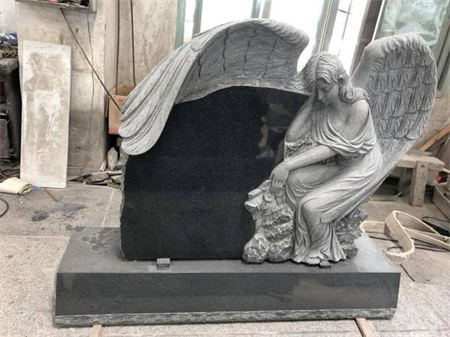
International shipping of finished tombstones and monuments introduces handling and documentation concerns. Robust packaging, palletization, and crate design prevent chipping and surface scuffs during transit. Export paperwork, HS codes, and insurance must be arranged in advance; many suppliers offer consolidated shipments and FCL/LCL options to optimize cost for wholesale buyers. Attention to quality control at origin combined with appropriate packaging and clear font/file handoff procedures reduces claims and supports predictable delivery cycles.
In conclusion, font selection for memorial inscriptions is a technical decision influenced by manufacturing method, stone type, finish, and international logistics. For B2B buyers in the monument supply chain, specifying compatible fonts, providing vector outlines, and coordinating quality control and packaging requirements up front yields consistent, durable results that meet both aesthetic and regulatory expectations.
 Chaole industrial district ,Chongwu town,Huian,Fujian,362131,China


If you want to know more about our products designs
and get the best quotation, please don't hesitate to send a subscription
email,thank you!
Copyright © Huian Boda Stone Co.,Ltd All rights reserved.

ipv6 network supported


