



News
How Importers Reduce Stone Purchase Cost
Reducing per-unit expenditure on granite monuments and tombstones requires a systematic approach across sourcing, manufacturing, customization, quality control, and international shipping. For overseas monument importers, wholesalers, distributors, and funeral supply companies, cost management begins long before containers are loaded. Understanding where value is added in the supply chain allows buyers to make informed trade-offs between material choices, labor, and logistics.
Direct sourcing from quarries or integrated manufacturers is one of the most effective levers. Purchasing granite slabs and blocks upstream cuts out intermediary margins and provides greater control over stone selection. Common commercial granites typically cost less than rare or exotic varieties, and bulk purchases of consistent colors and grain patterns improve yield during cutting. Importers should evaluate suppliers’ quarrying practices, extraction yields, and lead times to assess true unit cost rather than relying solely on per-ton pricing.
Manufacturing efficiencies significantly affect final pricing. Modern fabrication techniques—CNC cutting, water-jet trimming, and automated polishing lines—reduce labor hours and minimize waste. Standardizing monument designs for high-volume runs allows manufacturers to optimize nesting patterns on slabs and reuse tooling, lowering scrap and setup costs. Pre-fabrication of modular components, such as standard base units and tablet shapes, streamlines assembly at destination markets and reduces per-piece labor expenses. Clear specifications for engraving depth, surface finishing (polished, honed, flamed), and edge profiling help avoid costly rework.
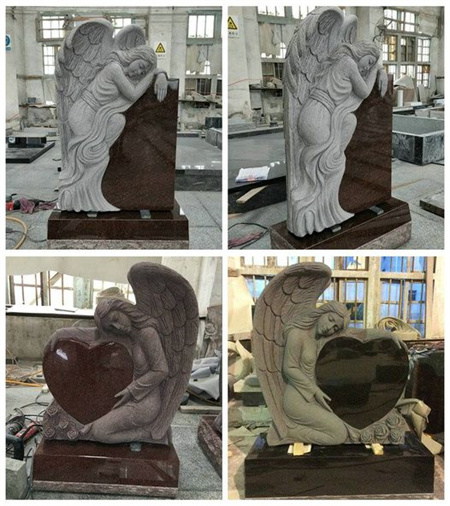
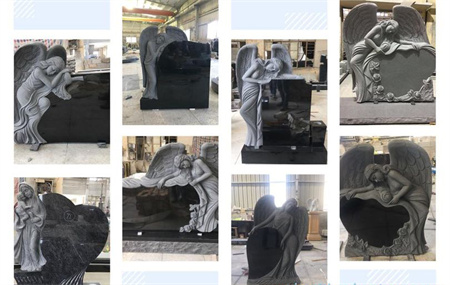
Customization remains a differentiator, but it can be managed to control costs. Offering a tiered catalog—standard monument models with optional add-ons—lets buyers balance customer expectations and margins. Intricate sculpting, inlaid materials, and uncommon finishes increase time and tooling expense; limiting bespoke work to high-margin orders keeps average costs down. Digital proofing and templating using CAD files reduce trial-and-error during production, ensuring more accurate first-pass results for headstone engraving and emblem placement.
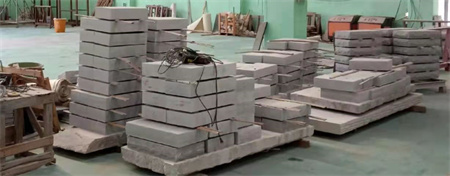
Robust quality control programs reduce downstream costs associated with returns, repairs, and reputational damage. Pre-shipment inspection routines should include dimensional checks, surface finish verification, and stability testing for assembled cemetery monuments. Third-party inspection services can provide objective audits, particularly when dealing with large-volume shipments. Proper sealing and surface treatment protocols extend product life and reduce claims related to staining or weathering, which is especially relevant for exporters targeting climates with heavy freeze-thaw cycles.
International shipping and logistics are often underestimated drivers of cost. Optimizing container utilization through careful packing, modular design, and protective bracing reduces the effective freight cost per monument. Choosing between full container load (FCL) and less-than-container load (LCL) depends on volume and scheduling flexibility; consolidated shipments can lower cost but add handling risk. Negotiating favorable Incoterms and long-term freight contracts, understanding HS codes for tariff classification, and ensuring complete documentation streamline customs clearance and minimize detention charges. Insurance, export packaging standards, and compliant materials for cushioning (to meet destination country regulations) should be factored into landed cost calculations.
Strategic partnerships and long-term sourcing agreements yield pricing stability and can secure volume discounts. Collaborating with manufacturers on continuous improvement projects—such as yield optimization, tooling standardization, and logistics consolidation—creates incremental savings over time. For importers, combining material selection, production planning, and shipping efficiency results in a lower total cost per unit without compromising the integrity of cemetery monuments or headstones.
In conclusion, reducing purchase cost for granite monuments requires an integrated approach that balances material selection, manufacturing efficiency, controlled customization, proactive quality control, and optimized international logistics. Buyers who align specifications and processes with reliable suppliers can lower landed costs while maintaining product standards.
 Chaole industrial district ,Chongwu town,Huian,Fujian,362131,China


If you want to know more about our products designs
and get the best quotation, please don't hesitate to send a subscription
email,thank you!
Copyright © Huian Boda Stone Co.,Ltd All rights reserved.

ipv6 network supported


